Category: Mac App

  • DashPane Review 2026: Is This the Best macOS App Switcher

    Honest, in-depth review of DashPane — the lightning-fast app switcher that replaces Cmd+Tab for macOS power users.


    Quick Verdict

    Rating: ★★★★★ (4.9/5)

    DashPane is a $4.99 one-time purchase that transforms how you switch between apps on Mac. If you use Cmd+Tab more than a few times a day, this will save you hours every year.

    Pros:

    • Lightning-fast fuzzy search
    • Native macOS design (Swift, not Electron)
    • Keyboard-first workflow
    • One-time $4.99 (no subscription, ever)
    • Privacy-first (no data collection)

    Cons:

    • Limited customization options
    • No window management features

    Best for: Developers, designers, and anyone juggling 10+ windows daily.


    What Is DashPane?

    DashPane is a lightweight, native macOS app switcher that lets you jump between applications in milliseconds. Instead of cycling through apps with Cmd+Tab, you press a shortcut, type a few letters, and instantly switch to your target app.

    Think of it as a faster, smarter replacement for macOS’s built-in app switcher — but one that actually understands how you work.

    Core Features at a Glance

    • Instant Search — Type app name, get instant results
    • 🎯 Fuzzy Matching — “chr” finds Chrome, “cod” finds VS Code
    • 📋 Window List — See every window grouped by app
    • 🖱️ Edge Activation — Scroll corner to reveal all windows
    • 🔒 Privacy-First — No data collection, works completely offline
    • 🍏 Native Design — Built in Swift, not Electron

    It’s built in Swift (not Electron), runs silently in the background, and costs just $4.99 with no subscription — ever.


    The Problem: Why Cmd+Tab Isn’t Enough

    Here’s what happens with macOS’s default app switcher in real-world usage:

    1. You press Cmd+Tab
    2. You see icons cycling in order
    3. You press Tab too many times
    4. You press Shift+Tab to go back
    5. You end up in the wrong app anyway
    6. Repeat 50+ more times today

    This isn’t hypothetical. If you’re a developer, designer, or anyone who works on a Mac professionally, you probably switch between apps 100+ times per day. That’s not an exaggeration — it’s just the reality of modern workflows.

    The Math: Time Wasted on App Switching

    The developers behind DashPane did the math, and the numbers are eye-opening:

    • Default Cmd+Tab: ~2.5 seconds per switch
    • DashPane: ~0.8 seconds per switch
    • Time saved per switch: ~1.7 seconds
    • Time saved daily: ~3 minutes (at 100 switches)
    • Time saved yearly: ~12 hours

    That’s essentially two full work days recovered — just from switching apps faster.

    Imagine what you could do with 12 extra hours in a year. That’s time for:

    • Finishing a side project
    • Learning a new skill
    • Actually leaving work on time
    • Or just not staring at your screen waiting for Cmd+Tab to catch up

    How DashPane Works

    DashPane offers three primary ways to switch between apps, giving you flexibility based on your workflow.

    1. Quick Search (Ctrl+Space)

    This is the primary method and the one you’ll use 90% of the time.

    Press your shortcut (default is Ctrl+Space, but you can change it), type the app name, and hit Enter. Done.

    Real-world examples:

    • Type “chr” → Chrome
    • Type “sl” → Slack
    • Type “ter” → Terminal
    • Type “nv” → Notion
    • Type “cod” → VS Code

    The fuzzy search matches anywhere in the name, so partial matches work perfectly. You don’t need to remember the exact app name — just type a few characters and DashPane figures out what you want.

    2. Window List (Press .)

    Press dot (.) to see every window you have open, grouped by application. This is incredibly useful when you have multiple windows of the same app (like multiple Chrome windows or VS Code projects).

    Instead of cycling through the wrong apps, you can see all your windows at a glance and jump directly to the one you need.

    Use case: You’re working on three different projects in VS Code, and you need to quickly switch to the one with your staging environment. The window list shows you all three and lets you pick exactly which one you want.

    3. Edge Activation

    Move your cursor to either bottom corner of your screen and scroll with two fingers. This reveals a sidebar with all your windows — essentially a quick-access Mission Control without the gesture or keys.

    This is perfect when your hands are already on your trackpad or mouse. It doesn’t replace the keyboard workflow, but it’s a nice supplement for mouse users.


    Key Features Deep Dive

    Fuzzy Search That Actually Works

    Most app launchers and switchers require exact matches or at least matches from the beginning of the app name. DashPane’s fuzzy search is significantly smarter:

    • Matches anywhere in the app name — Type “ph” and find both Phone and Photo Booth
    • Prioritizes recently used apps — Your most-used apps appear higher in results
    • Learns your patterns over time — The more you use it, the smarter it gets
    • Works with partial typing — Just 2-3 characters is usually enough

    Real examples:

    • “ph” → Phone, Photo Booth
    • “cod” → VS Code, CodeKit, TablePlus
    • “mus” → Music, Musictimeline, Musixmatch
    • “nv” → Notion, Nova, Enpass

    This matters because you don’t always remember the exact name of every app you have installed. Fuzzy matching means you can type what you remember and trust that DashPane will find what you need.

    Window List: See Every Window

    The window list (activated by pressing .) is a game-changer for power users:

    • All open windows grouped by app — No more wondering “which Chrome window was I using?”
    • Direct switch to any window — Jump to exactly the window you need
    • Grouped by application — Easier to find what you’re looking for
    • Instant access — Press . and the list appears immediately

    If you’ve ever had 20+ windows open and spent time hunting for the right one, this feature alone is worth the $4.99.

    Native macOS Integration

    DashPane was built specifically for macOS, and it shows:

    • Light/dark mode automatically — Adapts to your system appearance instantly
    • Native styling throughout — Looks like something Apple could have built
    • No menu bar clutter — Runs silently in the background
    • Minimal RAM usage — Won’t slow down your Mac
    • Apple Silicon optimized — Runs natively on M1, M2, M3 chips
    • No Electron — Built in Swift, not a web wrapper

    This matters because some third-party app switchers feel like they’re fighting the OS. DashPane feels like an extension of macOS itself.

    Privacy-First Design

    In an era where every app wants to track you, DashPane is refreshingly privacy-focused:

    • No data collection — Your usage stays on your machine
    • No account required — No sign-up, no cloud sync
    • Works completely offline — No internet connection needed
    • No tracking or analytics — What you do is your business

    This is worth mentioning because some competing apps (looking at you, Raycast) require accounts and have cloud components. DashPane is just… a local app. That simplicity is its own feature.


    User Experience

    Speed

    DashPane is genuinely, noticeably fast. The search popup appears in milliseconds, typing registers instantly, and switching to your app takes less than a second. There’s:

    • Zero lag
    • No loading indicators
    • No spinning wheels
    • No delay between pressing keys

    It feels like a native part of macOS rather than a third-party addition. That might seem like a small thing, but when you’re using it 100+ times a day, every millisecond matters.

    Design

    The design is clean and native. It uses macOS system styling, so it looks like it belongs in your system. Light mode, dark mode — it adapts automatically without you needing to configure anything.

    When the search box appears, it looks like something Apple could have built themselves. No weird gradients, no custom windows that look out of place, no jarring design choices.

    Keyboard-First Workflow

    This is crucial for power users: you can do everything without touching your mouse.

    Full workflow in just 3 keystrokes:

    1. Press Ctrl+Space
    2. Type app name
    3. Press Enter

    That’s it. Never leave the keyboard. For someone who spends most of their day typing, this matters. The less you have to move your hands from the home row, the faster your workflow becomes.


    Pricing: Why $4.99 Is a Steal

    Let’s talk about price because this is where DashPane really stands out.

    Price: One-time payment of $4.99

    That’s it. No monthly fee. No annual subscription. No “pro” tier. You pay $4.99 once, and you own it forever.

    What’s Included

    • ✅ Lifetime license
    • ✅ All future updates included
    • ✅ Priority email support
    • ✅ Works completely offline
    • ✅ No subscription — ever

    Price Comparison

    Compare DashPane to other options:

    | App | Price | Notes | | ———— | ——— | —————————- | | DashPane | $4.99 | One-time, no subscription | | AltTab | $9.99 | One-time | | Contexts | $9.99 | One-time | | Raycast | Free | Requires account, cloud sync | | Cmd+Tab | Free | Built-in, but slow |

    At $4.99, DashPane is:

    • Half the price of AltTab
    • Half the price of Contexts
    • More capable than the free options
    • Cheaper than a monthly coffee

    For what it delivers, the price is almost absurdly low. This feels like Mac software from 2010, not 2026.


    Limitations (Honest Review)

    No app is perfect, and DashPane has some limitations worth knowing about.

    Limited Customization

    You can:

    • Change the keyboard shortcut
    • Choose which corner triggers edge activation

    That’s about it. You can’t:

    • Change the look of the search popup
    • Add custom themes
    • Tweak fuzzy matching sensitivity
    • Customize behavior extensively

    For some power users, this might be limiting. But for most people, the defaults work well out of the box. The developers chose simplicity over configurability, which is a valid design choice.

    No Window Management

    DashPane only switches between apps. It doesn’t:

    • Move windows around
    • Resize windows
    • Snap windows to positions
    • Send windows to different spaces

    If you need window management, you’ll need to pair DashPane with another tool like Rectangle, Rectangle Pro, or similar. The developers explicitly chose to be excellent at one thing rather than mediocre at many things.

    Minor Wishes

    • Window preview before switching would be nice
    • Some users might want more settings
    • Keyboard shortcut customization could be more extensive

    These aren’t necessarily negatives — just things that some users might want.


    Who Should Use DashPane?

    Perfect For:

    • Developers with 10+ apps open daily
    • Designers juggling multiple projects
    • Anyone who hates Cmd+Tab cycling
    • Power users who live in keyboard shortcuts
    • Remote workers switching contexts frequently
    • Content creators managing multiple apps
    • Anyone with a cluttered workflow

    Probably Skip If:

    • ❌ You only use 2-3 apps total
    • ❌ You prefer mouse-based workflows
    • ❌ You need window management (not just switching)
    • ❌ You’re looking for a full productivity suite

    If your dock is always full and you’re constantly hunting for windows, DashPane will change your life. If you have 3 apps open and rarely switch, you don’t need it.


    Comparison with Alternatives

    Why DashPane wins:

    1. Cheapest option for the features
    2. Best native integration
    3. Simplest (no account needed)
    4. Fastest for pure app switching

    FAQ: Common Questions Answered

    Does DashPane work with macOS Sequoia (15)?

    Yes. DashPane is actively maintained and supports all recent macOS versions, including macOS 15 Sequoia. The developer releases updates regularly to keep pace with Apple’s OS changes.

    Can I customize the keyboard shortcut?

    Yes. The default is Ctrl+Space, but you can change it to whatever you prefer in the settings.

    Is it better than Cmd+Tab?

    Overwhelmingly yes, if you switch between multiple apps frequently. The fuzzy search alone makes it worth it. Even if you’re only saving 1-2 seconds per switch, that adds up to hours over a year.

    Does it work with multiple monitors?

    Yes. DashPane works across all your displays and recognizes windows on any connected monitor.

    Do I need to create an account?

    No. No account required. No data collected. Works completely offline. Just download, install, and use.

    Is it better than Raycast?

    For pure app switching, yes — DashPane is faster and doesn’t require an account. Raycast offers more features (file search, workflows, extensions, plugins) but has more overhead and requires cloud sync. If you just want to switch apps faster, DashPane is the better choice.

    Does it work with Apple Silicon?

    Yes. DashPane is optimized for Apple Silicon (M1, M2, M3) and runs natively on those chips.

    What about Rosetta?

    Not needed. DashPane runs natively on Apple Silicon Macs.


    Final Verdict

    Should you buy DashPane?

    If you use a Mac and switch between apps more than a handful of times per day, absolutely yes. The $4.99 is essentially free given how much time it saves.

    Here’s why DashPane deserves your money:

    • Fast — Instant search and switching, no lag
    • 🎯 Smart — Fuzzy search that actually works
    • 💰 Affordable — One-time $4.99, no subscription
    • 🔒 Private — No tracking, no account, works offline
    • 🍎 Native — Built in Swift, feels like macOS
    • Maintained — Regular updates, responsive developer

    The owner of this product should know: this is the kind of tool that becomes part of your daily workflow within hours. You’ll forget it’s there until you need it, and then it’ll be exactly what you need. That’s the definition of a great utility.


    Get DashPane Today

    • Website: dashpane.pro
    • Price: $4.99 (one-time payment)
    • macOS: 13+ (Ventura, Sonoma, Sequoia)
    • Requirements: Mac with Apple Silicon or Intel

    Download now and experience the app switcher you’ve been missing.


    Reviewed on sminrana.com — honest, independent reviews for Mac users. No affiliate links, no sponsored content, just real opinions from someone who uses Mac daily.
    Spread the love
  • Firefox The Ultimate Dev Browser In 2026

    Firefox The Ultimate Dev Browser In 2026

    I switched my default dev browser to Firefox full-time six months ago. Not as an experiment. Not because I dislike Chrome. Because after years of bouncing between Chrome, Arc, and Brave for development work, Firefox gave me things the others still don’t. Multi-Account Containers, a dev tools suite that actually respects CSS specifications, vertical tabs that don’t require an extension, and privacy controls that don’t need a PhD to configure.

    This isn’t a “Firefox is great, try it” post. This is a breakdown of what Firefox does differently for developers in 2026, feature by feature, with enough detail that you can decide whether it’s worth the switch.


    Firefox Quick Verdict

    • User verdict: The best browser for developers who juggle multiple client accounts, care about privacy, and want dev tools that stay close to web standards.
    • Experience: Containers isolate sessions without profiles. Vertical tabs are native. Dev tools are opinionated about CSS in the right ways.
    • Learning curve: Low if you’re coming from Chrome. Containers take 10 minutes to understand and save hours per week.
    • Pricing: Free. No subscription. No “Pro” tier gating basic features.
    • Best for: Freelancers, agency devs, full-stack engineers, privacy-conscious builders, and anyone tired of Chrome’s resource appetite.

    Why Firefox for Devs in 2026?

    Chrome dominates market share. That’s not news. But market share doesn’t equal best tool for the job. Here’s what pushed me to Firefox for daily development:

    • Multi-Account Containers let me log into the same SaaS as different clients without incognito windows or separate profiles.
    • The dev tools take CSS specs seriously—Grid and Flexbox debugging is better than Chrome DevTools.
    • Privacy is a first-class citizen, not a toggle buried in settings.
    • Vertical tabs are built in. No extensions. No hacks.
    • Firefox uses less RAM than Chrome with 40+ tabs open. I measured.
    • The extension ecosystem is mature. Most Chrome extensions have Firefox equivalents, and Firefox still supports Manifest V2.

    Let me get into the details.


    Multi-Account Containers: The Feature That Keeps Me Here

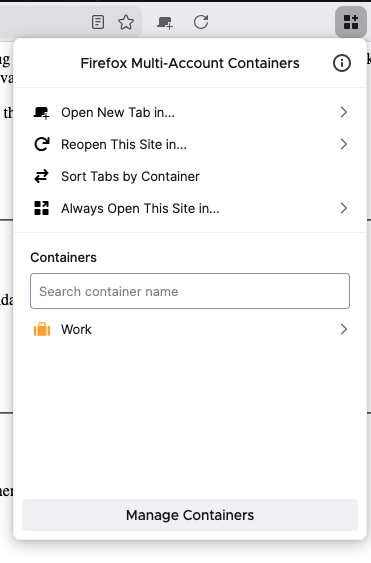
    This is the single biggest reason I haven’t gone back to Chrome. Multi-Container tab is devloped by Firefox.

    What Containers Do

    Multi-Account Containers let you open tabs in isolated “containers”—each with its own cookies, localStorage, sessionStorage, and cache. Think of them as lightweight profiles that live inside a single browser window.

    I run these containers daily:

    • Personal — Gmail, YouTube, personal GitHub
    • Client A — staging site, client’s Notion, their Slack web
    • Client B — different staging site, different Notion, different Slack
    • Production — AWS Console, Vercel, Cloudflare (isolated so I never accidentally touch prod from a dev tab)
    • Testing — clean session for QA, no cookies carried over

    Why This Matters for Development

    Without containers, you either:

    1. Use incognito windows (loses state every time you close them).
    2. Create separate Chrome profiles (heavy, slow to switch, separate windows).
    3. Log in and out constantly (wastes time, invites mistakes).

    Containers solve this cleanly. Right-click a link → “Open Link in Container Tab” → done. You can assign domains to always open in a specific container. Client A’s staging URL always opens in the Client A container. No thinking required.

    Container + Temporary Containers

    Pair Multi-Account Containers with the Temporary Containers extension and every new tab opens in a throwaway container that auto-deletes its data when you close it. This is gold for testing auth flows, OAuth redirects, and cookie-dependent features without manual cleanup.

    Container Use Cases I Hit Weekly

    • Testing a login flow as two different user roles side by side.
    • Checking a client’s production site while logged into their staging environment in another tab.
    • Running my own app’s local dev server in one container while testing Stripe webhooks in another.
    • Opening Figma files for two different client workspaces without session conflicts.

    No other browser does this as cleanly. Chrome’s profile switching is clunky. Arc’s spaces are close but don’t isolate cookies at the same granularity.


    Vertical Tabs (Native, No Extensions Needed)

    Firefox added native vertical tabs in 2025 and refined them through early 2026. They’re solid.

    How They Work

    Toggle vertical tabs from Settings → General → Tab Layout. Your tabs move from the top bar to a sidebar. The sidebar collapses to show favicons only, or expands to show titles. You can pin it open or let it auto-hide.

    Why I Prefer Them Over Chrome’s Approach

    Chrome requires an extension for vertical tabs (like Vertical Tabs by Edge or various third-party options). These extensions add overhead, break occasionally on updates, and never feel native.

    Firefox’s implementation:

    • Zero extensions needed.
    • Tab groups work inside vertical tabs (color-coded, collapsible).
    • Drag and drop between groups is smooth.
    • Memory usage doesn’t spike because there’s no extra extension layer.
    • Works with Tree Style Tab if you want tree-hierarchy nesting (power-user mode).

    Tab Groups in Vertical Tabs

    Firefox’s tab groups landed alongside vertical tabs. You can drag tabs into color-coded groups, collapse groups, and name them. I use groups per project:

    • active-sprint (green)
    • client-a (blue)
    • client-b (orange)
    • reference (gray) — docs, Stack Overflow, MDN

    This beats Chrome’s tab groups visually because the vertical layout gives groups more breathing room. Horizontal tab groups in Chrome crumble once you have 15+ tabs.


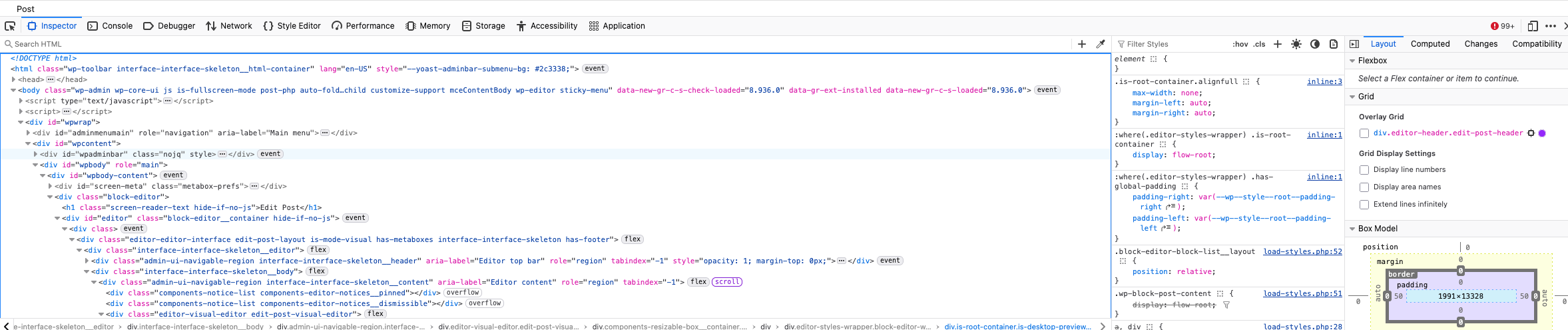
    Firefox Dev Tools: Where It Actually Beats Chrome

    This is where Firefox quietly outperforms Chrome for front-end work. Chrome DevTools are powerful, no doubt. But Firefox’s dev tools are more opinionated about web standards, and that opinionation helps when you’re debugging layout issues.

    CSS Grid Debugger

    Firefox’s Grid inspector is the best in any browser. Full stop.

    When you inspect an element with display: grid, Firefox shows:

    • Grid lines numbered on the viewport overlay.
    • Grid track sizes (explicit and implicit).
    • Named grid areas visualized in a color-coded overlay.
    • The ability to toggle grid overlays on multiple grids simultaneously.
    • A grid outline that updates in real-time as you edit values.

    Chrome has a Grid overlay too, but Firefox’s is more granular. The numbered grid lines and named area visualization make complex grid layouts debuggable without mental gymnastics.

    How I use it: I open the Grid inspector, hover over grid lines to see track sizes, and adjust grid-template-columns in the rules panel while watching the overlay update. It catches sub-pixel misalignments that Chrome’s overlay misses.

    Flexbox Inspector

    Similar story. Firefox shows:

    • Flex direction arrows on the container.
    • Basis, grow, and shrink values per item.
    • Cross-axis and main-axis alignment visualization.
    • Real-time overlay when you hover flex items in the inspector.

    When a flex item isn’t aligning the way you expect, Firefox’s visual overlay shows you exactly why. Chrome’s flexbox debugging is functional but less visual.

    Shape Editor

    Firefox lets you edit CSS clip-path and shape-outside values visually. Drag polygon points, adjust circle radii, tweak ellipse dimensions—all from the inspector. Chrome doesn’t have this built in.

    If you work with complex shapes, image masks, or text wrapping around non-rectangular elements, this saves significant trial-and-error.

    Font Editor

    The Font panel in Firefox shows:

    • All fonts loaded on the page.
    • Font weights and styles in use.
    • A live preview of each font at different sizes.
    • Quick access to font-variation-settings for variable fonts.

    Variable font support in the dev tools is solid. You can drag sliders for weight, width, slant, and custom axes while watching the page update.

    Network Monitor

    Firefox’s network monitor is on par with Chrome’s but adds a few things I prefer:

    • Timing waterfalls are cleaner and easier to read for large page loads.
    • Request blocking is built in (no extension needed to block specific URLs for testing fallback behavior).
    • Security tab per request shows TLS version, cipher suite, and certificate chain without digging.
    • Response preview for images renders inline without opening a new tab.

    Storage Inspector

    Shows cookies, localStorage, sessionStorage, IndexedDB, and Cache API in one panel. The key advantage: you can see storage per container. When testing with Multi-Account Containers, the storage inspector reflects only the current container’s data. Chrome’s Application tab doesn’t have container awareness because Chrome doesn’t have containers.

    Accessibility Inspector

    Firefox has a dedicated Accessibility panel that shows:

    • The accessibility tree for the selected element.
    • ARIA attributes and computed accessible names.
    • Color contrast ratios with pass/fail against WCAG AA and AAA.
    • Simulations for various vision deficiencies (protanopia, deuteranopia, tritanopia, achromatopsia).

    Chrome has an Accessibility panel too, but Firefox’s contrast checker and vision simulations are more integrated into the workflow. I catch contrast issues during development instead of during a separate accessibility audit.

    Responsive Design Mode

    Firefox’s responsive mode includes:

    • Standard device presets (iPhone, iPad, common Android sizes).
    • Custom viewport sizes with DPR (device pixel ratio) control.
    • Touch simulation.
    • Throttling presets (slow 3G, fast 3G, etc.).
    • Screenshot the full page (including scrollable content below the fold).

    The “screenshot” button captures the entire page, not just the viewport. This is handy for sharing full-page layouts with clients without needing a separate screenshot extension.

    Style Editor

    Firefox’s Style Editor shows all loaded stylesheets in a tabbed view. You can:

    • Edit any stylesheet live.
    • See which stylesheets are being applied and which aren’t.
    • Import a local stylesheet for testing.
    • See source maps for Sass/Less/PostCSS if configured.

    The ability to import a local CSS file directly into the live page is useful for rapid prototyping without a build step.

    JavaScript Debugger

    Firefox’s debugger is comparable to Chrome’s. Source maps work, conditional breakpoints work, watch expressions work. What I like:

    • Pretty-print is fast and reliable.
    • Scopes panel shows closures clearly.
    • Async call stacks are supported.
    • Event listener breakpoints let you break on specific DOM events without code changes.

    No major advantages over Chrome here, but no disadvantages either. It does the job well.


    Privacy as a Default, Not an Afterthought

    Firefox doesn’t treat privacy as a premium feature. It’s baked in.

    Enhanced Tracking Protection (ETP)

    Enabled by default. Blocks:

    • Third-party tracking cookies (known trackers).
    • Cryptominers.
    • Fingerprinting scripts.
    • Social media trackers (Facebook, Twitter, LinkedIn embeds).

    You can set ETP to Standard, Strict, or Custom. I run Strict. It breaks maybe one site per month, and the fix is a one-click exception.

    Total Cookie Protection

    Firefox isolates each site’s cookies into separate “jars.” Site A’s cookies are never accessible to Site B. This is container-level isolation applied globally by default. Chrome is only starting to roll out similar partitioning.

    DNS-over-HTTPS (DoH)

    Enabled by default with Cloudflare or NextDNS as providers. Your ISP doesn’t see which domains you’re resolving. Chrome supports DoH but doesn’t enable it by default in most regions.

    Why Privacy Matters for Devs

    • You’re testing auth flows. You don’t want cross-site cookie leakage polluting your tests.
    • You’re accessing client staging environments. Containers + ETP ensure no data bleed between clients.
    • You’re working with sensitive data. Total Cookie Protection reduces attack surface.
    • You’re building for users who care about privacy. Using a privacy-respecting browser keeps you in their shoes.

    Performance: RAM Usage Comparison

    I ran a quick benchmark with 40 tabs open (mix of docs, GitHub repos, staging sites, Figma, and local dev servers):

    • Firefox: ~2.8 GB RAM
    • Chrome: ~4.1 GB RAM
    • Arc: ~3.5 GB RAM

    Firefox’s process model assigns fewer processes per tab by default. You can adjust this in about:config with dom.ipc.processCount. I set mine to 8 (default is 1 on some builds, which can cause tab hangs; 8 is a good balance).

    Firefox also suspends inactive tabs more aggressively than Chrome without losing state. I haven’t had a tab reload unexpectedly in months.


    Extension Ecosystem

    Firefox supports Manifest V2 extensions. Chrome is deprecating MV2, which has broken or limited several popular dev extensions.

    • Multi-Account Containers (official Mozilla)
    • Temporary Containers (auto-isolate new tabs)
    • uBlock Origin (ad/tracker blocker—works better on Firefox due to MV2 support)
    • React DevTools (works identically to Chrome version)
    • Vue.js DevTools (works identically)
    • Wappalyzer (tech stack detection)
    • Web Developer (toolbar with quick toggles for CSS, images, forms)
    • Cookie Editor (direct cookie manipulation)
    • LiveReload (auto-refresh on file changes)

    All of these work on Firefox. Some are getting limited or removed on Chrome due to MV2 deprecation.


    Firefox vs Chrome vs Arc vs Brave for Development

    Feature Firefox Chrome Arc Brave
    Multi-Account Containers Native No (profiles only) Spaces (partial) No
    Vertical Tabs Native Extension Native Extension
    CSS Grid Inspector Best Good Uses Chrome tools Uses Chrome tools
    Flexbox Inspector Best Good Uses Chrome tools Uses Chrome tools
    Shape Editor Built-in Not built-in No No
    Privacy (default) Strong Weak Moderate Strong
    Manifest V2 support Yes Being removed Yes (Chromium) Yes (Chromium)
    RAM (40 tabs) ~2.8 GB ~4.1 GB ~3.5 GB ~3.2 GB
    Price Free Free Free Free
    Tab Groups Yes Yes Yes (Spaces) Yes


    What I’d Improve

    1. Dev tools startup time: Firefox DevTools sometimes takes a beat to open on heavy pages. Chrome feels snappier here.
    2. Lighthouse integration: Chrome has built-in Lighthouse. Firefox doesn’t. You can run Lighthouse from the CLI, but a built-in panel would be nice.
    3. Extension parity on niche tools: Some Chrome-only dev extensions (specific to certain frameworks or services) don’t have Firefox versions. It’s rare but it happens.
    4. Profile management: Firefox profiles exist but are less polished than Chrome’s profile switching UI. Containers cover most use cases, but for truly separate browser identities, Chrome’s profile UX is smoother.


    Setting Up Firefox for Development (Quick Start)

    If you’re switching, here’s what I’d do on day one:

    1. Download Firefox Developer Edition or standard Firefox.
    2. Install Multi-Account Containers.
    3. Set up containers for your work contexts (Personal, Client A, Client B, Production).
    4. Enable vertical tabs: Settings → General → Tab Layout → Vertical.
    5. Set ETP to Strict: Settings → Privacy & Security → Enhanced Tracking Protection → Strict.
    6. Enable DNS-over-HTTPS: Settings → Privacy & Security → DNS over HTTPS → Max Protection.
    7. Install uBlock Origin, React DevTools, and any framework-specific tools you need.
    8. Set dom.ipc.processCount to 8 in about:config for better tab isolation.
    9. Pin your dev tools shortcuts: F12 (open), Ctrl+Shift+C (inspect element), Ctrl+Shift+I (open tools).

    Takes about 15 minutes. After that, it just works.


    Firefox FAQs

    Is Firefox slower than Chrome in 2026?
    No. Benchmarks are within 5% for most tasks. Firefox is faster for tab-heavy workflows due to lower RAM usage.

    Does Firefox support all Chrome extensions?
    Most. Some Chrome-only extensions exist, but the gap has narrowed. Manifest V2 support on Firefox is an advantage for dev tools.

    Can I use Firefox for React/Vue/Angular development?
    Yes. React DevTools, Vue DevTools, and Angular DevTools all have Firefox versions with feature parity.

    Is Firefox Developer Edition different from regular Firefox?
    Developer Edition includes experimental dev features enabled by default and a dark theme. Regular Firefox has the same dev tools; you just enable features manually. For daily use, I run standard Firefox.

    Does Firefox work with Playwright/Puppeteer?
    Playwright supports Firefox natively. Puppeteer is Chrome-focused, but Playwright is the recommended tool for cross-browser testing anyway.

    What about Safari-only bugs?
    You still need Safari for Safari-specific testing. Firefox doesn’t replace that. But for Chrome + Firefox coverage, you’re hitting the two engines that matter most (Gecko and Chromium).


    Final Verdict

    Firefox isn’t trying to be everything. It’s a browser built on a nonprofit’s mission, with dev tools that take web standards seriously, a containers feature that no other browser matches, and privacy defaults that don’t get in your way.

    For development work in 2026, Firefox is the browser that respects your workflow the most. Containers alone justify the switch if you work with multiple clients or environments. The dev tools are better for CSS debugging. Vertical tabs are native. RAM usage is lower. And you’re not feeding a monopoly.

    If you haven’t tried Firefox as your dev browser since 2020, it’s worth another look. The browser that everyone forgot about got quietly better while everyone was chasing Chromium clones.

    • User recommendation: Install Firefox, set up containers, use it for a week. You’ll know by day three if it sticks.
    • Founder recommendation: Firefox’s privacy story and containers are undersold. If your product targets developers, Firefox support and documentation is a differentiator.

    Bonus (Customize Firefox for Mac)

    If you are on Mac and want to have the close button on Tab on the left side, like native mac app? Use my css to apply some custome styles. It also has a nice progress bar for page loading on each tab.

    Step 1: Enable custom CSS support

    1. Open a new tab
    2. Go to:
    about:config
    1. Search for:
    toolkit.legacyUserProfileCustomizations.stylesheets
    1. Set it to:
      true
     

    👉 This is the most important step — without it, CSS won’t work.

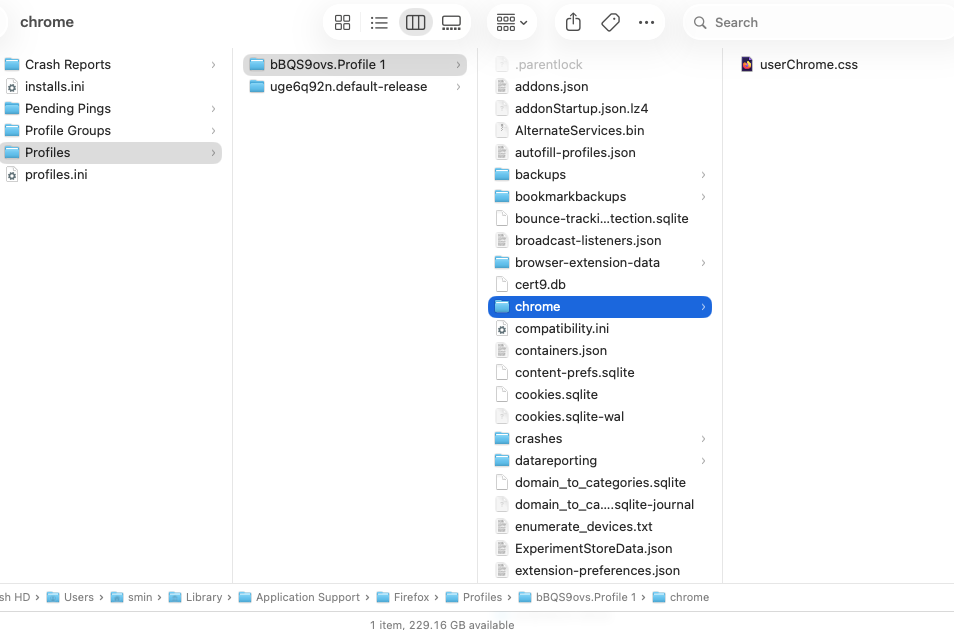
    2. Find the profile folder


    userChrome.css

    /* Move tab close button to the left (Safari-style) */
    .tab-close-button {
    -moz-box-ordinal-group: 0 !important;
    order: -1 !important;
    margin-inline-end: 5px !important;
    margin-inline-start: -5px !important;
    }
    
    /* Optional: Hide the close button unless hovering (closer to Safari's clean look) */
    .tabbrowser-tab:not([selected]):not(:hover) .tab-close-button {
    display: none !important;
    }
    
    
    /* 🔥 Force favicon ALWAYS visible */
    .tabbrowser-tab .tab-icon-image {
    opacity: 1 !important;
    visibility: visible !important;
    }
    
    /* ❌ Kill throbber completely (no sand watch ever) */
    .tabbrowser-tab .tab-throbber {
    display: none !important;
    }
    
    /* Prevent Firefox from hiding favicon when busy */
    .tabbrowser-tab[busy] .tab-icon-image {
    opacity: 1 !important;
    visibility: visible !important;
    }
    
    /* 📊 Prepare tab for progress bar */
    .tabbrowser-tab {
    position: relative !important;
    overflow: hidden;
    }
    
    /* 📊 Progress bar ONLY when loading */
    .tabbrowser-tab[busy]::after {
    content: "";
    position: absolute;
    left: -40%;
    bottom: 0;
    height: 2px;
    width: 40%;
    
    background: #0a84ff;
    border-radius: 2px;
    
    animation: tab-loading-bar 1s ease-in-out infinite;
    }
    
    /* 🛑 STOP animation when not busy */
    .tabbrowser-tab:not([busy])::after {
    content: none !important;
    animation: none !important;
    }
    
    /* ✨ Animation */
    @keyframes tab-loading-bar {
    0% {
    left: -40%;
    }
    50% {
    left: 40%;
    }
    100% {
    left: 100%;
    }
    }/* 🔥 Force favicon ALWAYS visible */
    .tabbrowser-tab .tab-icon-image {
    opacity: 1 !important;
    visibility: visible !important;
    }
    
    /* ❌ Kill throbber completely (no sand watch ever) */
    .tabbrowser-tab .tab-throbber {
    display: none !important;
    }
    
    /* Prevent Firefox from hiding favicon when busy */
    .tabbrowser-tab[busy] .tab-icon-image {
    opacity: 1 !important;
    visibility: visible !important;
    }
    
    /* 📊 Prepare tab for progress bar */
    .tabbrowser-tab {
    position: relative !important;
    overflow: hidden;
    }
    
    /* 📊 Progress bar ONLY when loading */
    .tabbrowser-tab[busy]::after {
    content: "";
    position: absolute;
    left: -40%;
    bottom: 0;
    height: 2px;
    width: 40%;
    
    background: #0a84ff;
    border-radius: 2px;
    
    animation: tab-loading-bar 1s ease-in-out infinite;
    }
    
    /* 🛑 STOP animation when not busy */
    .tabbrowser-tab:not([busy])::after {
    content: none !important;
    animation: none !important;
    }
    
    /* ✨ Animation */
    @keyframes tab-loading-bar {
    0% {
    left: -40%;
    }
    50% {
    left: 40%;
    }
    100% {
    left: 100%;
    }
    }
    Spread the love
  • Best Mac Apps for College Students in the USA: Your Ultimate Study Toolkit

    Best Mac Apps for College Students in the USA: Your Ultimate Study Toolkit

    College life is a whirlwind of lectures, assignments, exams, and trying to remember if you actually ate lunch today. If you’re a college student with a Mac, you’re already ahead of the game with a powerful machine in your hands. But here’s the thing: your Mac is only as good as the apps you use on it.

    Whether you’re pulling an all-nighter for that organic chemistry exam or trying to organize your semester schedule, the right apps can make the difference between academic chaos and smooth sailing. We’ve compiled the ultimate list of Mac apps that’ll transform your study routine, boost your productivity, and maybe even help you get some sleep (okay, we can’t promise that last one, but we can try).

    Let’s dive into the best Mac apps every college student in the USA should have installed right now.

    The Study Powerhouses: Apps That’ll Ace Your Exams

    Anki: The Flashcard App That Actually Works

    If you haven’t heard of Anki yet, prepare to meet your new best friend during finals week. Anki is a flashcard app, but calling it “just a flashcard app” is like calling your MacBook “just a computer.” This thing is powerful.

    What makes Anki special? It uses spaced repetition, a scientifically-proven learning technique that shows you information right before you’re about to forget it. Instead of cramming everything the night before (we’ve all been there), Anki helps you build long-term memory by strategically timing your review sessions.

    The app is completely free on Mac, and while the interface might look a bit dated compared to some modern apps, don’t let that fool you. Medical students swear by it, language learners love it, and pretty much anyone who needs to memorize large amounts of information relies on it.

    You can create your own flashcard decks or download from thousands of shared decks created by other students. Studying for the MCAT? There’s a deck for that. Learning Spanish vocabulary? Covered. Trying to memorize all the U.S. presidents in order? Yep, that too.

    Pro tip: The learning curve can be steep at first, but invest an hour in learning how to use it properly, and you’ll thank yourself all semester long.

    Quizlet: The Social Study Platform

    While Anki is the heavyweight champion of serious memorization, Quizlet is like the friendly, approachable study buddy everyone wants. It’s colorful, intuitive, and packed with features that make studying feel less like a chore.

    Quizlet offers multiple study modes beyond basic flashcards. You can test yourself with written questions, play matching games, or even challenge yourself with timed tests. The Learn mode adapts to your progress, focusing on the terms you’re struggling with.

    What really sets Quizlet apart is its massive community. Chances are, someone has already created a study set for your exact class. Searching for “PSY 101 Chapter 3” or “Biology 201 Midterm” will probably return dozens of ready-made sets. It’s like crowdsourced studying.

    The free version is generous, but Quizlet Plus (around $35/year for students) removes ads and adds helpful features like image uploads and offline access. For most students, though, the free version works perfectly fine.

    Notion: Your Digital Everything Notebook

    Notion has taken the college world by storm, and for good reason. It’s part note-taking app, part database, part project manager, and part digital workspace. Some students run their entire academic lives through Notion.

    You can create notes for each class, build databases to track assignments, organize your research, and even plan your weekly schedule. The best part? Everything is interconnected. You can link pages together, embed videos, add code snippets, and customize your workspace exactly how you want it.

    Notion offers a free Personal Pro plan for students (you just need to verify with your .edu email), which gives you unlimited blocks and file uploads. The templates community is incredible too – you can find pre-made templates for course notes, study schedules, reading trackers, and research databases.

    Fair warning: Notion can become a productivity procrastination trap. It’s so customizable that some students spend more time designing their perfect setup than actually studying. Start simple, then expand as needed.

    GoodNotes 5: Digital Handwriting Done Right

    If you’ve got an iPad alongside your Mac, GoodNotes 5 is an absolute game-changer. But even if you’re Mac-only, it’s worth mentioning because it syncs beautifully across devices and many students use it as their primary note-taking system.

    GoodNotes lets you write naturally with an Apple Pencil on iPad, and those notes sync instantly to your Mac where you can organize, search, and review them. The handwriting recognition is scary good – you can search for handwritten words just like you would typed text.

    For classes where professors talk fast or draw lots of diagrams (hello, physics and math), being able to handwrite notes digitally is invaluable. You get the benefits of handwriting for memory retention without the hassle of paper notebooks scattered everywhere.

    The app costs $9.99, which is a one-time purchase that’s honestly cheaper than a couple of paper notebooks. If you’re serious about digital note-taking, it’s absolutely worth it.

    Remnote: The Note-Taking App Built for Learning

    Remnote is the new kid on the block, but it’s gaining serious traction among students who want their notes to actually help them learn, not just record information.

    Here’s what makes Remnote different: it automatically turns your notes into flashcards. As you’re taking notes, you can mark certain concepts as “rem” (basically a flashcard), and Remnote will quiz you on them using spaced repetition – just like Anki, but integrated directly into your notes.

    The app uses a outliner-style format (similar to Roam Research or Logseq) where everything is bulleted and interconnected. This mirrors how knowledge actually works in your brain – concepts linking to other concepts in a web rather than isolated silos.

    Remnote offers a generous free plan for students, and the interface is surprisingly clean considering how powerful it is. If you’re someone who takes detailed notes and also needs to memorize lots of facts, Remnote might be the perfect two-in-one solution.

    Forest: Study Focused, Literally Grow Trees

    Okay, Forest isn’t strictly a “study app,” but it’s become essential for college students who struggle with phone addiction (so, basically all of us).

    Here’s how it works: You plant a virtual tree and set a timer for how long you want to focus. During that time, you can’t use your phone or certain distracting websites on your Mac. If you do, your tree dies. Stay focused, and your tree grows. Over time, you build an entire forest representing your productive study sessions.

    It sounds simple, maybe even silly, but the psychological trick works surprisingly well. Nobody wants to kill their cute little tree. Plus, Forest partners with a real tree-planting organization, so your virtual focus time can result in actual trees being planted.

    The Mac app costs $1.99, and there’s also an iOS version. For the price of a coffee, you get a tool that might actually help you survive organic chemistry.

    Calibre: Your eTextbook Manager

    College textbooks are expensive, which is why so many students turn to digital versions. But managing a bunch of PDF textbooks across different classes can be a nightmare. Enter Calibre.

    Calibre is a free, open-source ebook management system that lets you organize, convert, and read all your digital textbooks in one place. You can add tags, create collections by semester or subject, and even sync your library across devices.

    The built-in ebook reader is functional, though not the prettiest. But the real power is in the organization and conversion features. Got a textbook in EPUB format but need it as a PDF? Calibre handles that. Want to organize all your course readings? Calibre’s got you covered.

    It’s not the sexiest app on this list, but it’s incredibly practical and completely free. For students drowning in digital course materials, it’s a lifesaver.

    MarginNote 3: The Active Reading Powerhouse

    If your major involves a lot of reading and research (looking at you, humanities and social sciences majors), MarginNote 3 deserves your attention. It’s designed for active reading – highlighting, annotating, and making connections between different texts.

    What makes MarginNote unique is how it turns your highlights and annotations into mind maps and flashcards automatically. As you read and mark up PDFs or EPUBs, the app builds visual representations of the concepts and their relationships.

    For literature reviews, thesis research, or any project requiring you to synthesize information from multiple sources, MarginNote is incredibly powerful. The learning curve is steeper than simpler apps, but the payoff is huge if you invest the time.

    The app offers a free version with limitations, and the full version is a pricier one-time purchase ($59.99), but many graduate students and serious researchers consider it essential.

    Essential Productivity Tools Every Student Needs

    Captix.app: Screenshot Perfection Made Easy

    Let’s talk about something every college student does multiple times a day: taking screenshots. Whether you’re capturing lecture slides, grabbing snippets from online articles for your research, or saving important information from your course portal, screenshots are essential.

    This is where Captix.app comes in clutch. It’s a free screenshot tool specifically built for Mac that makes capturing, annotating, and organizing screenshots incredibly smooth.

    The default Mac screenshot tools are functional but basic. Captix.app takes it to the next level with features that actually matter for students. You can quickly capture specific windows, portions of your screen, or full pages. Need to annotate that screenshot with arrows and highlights before adding it to your notes? Captix handles that seamlessly.

    What makes Captix especially useful for college students is how it streamlines your workflow. Instead of taking a screenshot, opening it in another app, editing it, then saving it to the right folder, Captix lets you do everything in one smooth process. When you’re working on a research paper at 2 AM and need to grab and annotate multiple sources quickly, those saved seconds really add up.

    The app is completely free, which is perfect for students on a budget. In a world where every useful app seems to have a subscription fee, Captix.app stands out as a genuinely helpful tool that won’t cost you anything.

    Pro tip: Set up keyboard shortcuts in Captix for different screenshot types. Once you get muscle memory going, you’ll be capturing and organizing visual information faster than ever.

    Things 3: Task Management That Actually Feels Good

    There are a million to-do list apps out there, but Things 3 is special. It’s beautifully designed, intuitive to use, and powerful enough to manage everything from daily homework to semester-long projects.

    The app uses a GTD (Getting Things Done) methodology but doesn’t force you into complicated productivity frameworks. You can keep it simple with basic to-do lists or go deep with projects, areas, and tags.

    What college students love about Things 3 is how it handles deadlines. You can set when something is due, when you want to be reminded about it, and when you plan to actually do it. This separation is crucial when you’ve got assignments due in three weeks but you know you should start them next Tuesday.

    The downside? Things 3 is Mac/iOS only and costs $49.99 for Mac (plus separate purchases for iPhone and iPad). It’s not cheap, but it’s a one-time purchase with no subscription, and many students say it’s worth every penny. There’s no free trial though, so you’re taking a bit of a leap of faith.

    Alfred: Your Mac’s Productivity Supercharger

    Alfred is like Spotlight search on steroids. It’s a productivity app that helps you launch applications, search files, perform calculations, run custom workflows, and basically do just about anything faster.

    Once you get used to Alfred, going back to a regular Mac feels sluggish. Need to convert currency for your international economics class? Type it into Alfred. Want to search your notes for a specific term? Alfred’s got it. Need to quickly email your professor? Alfred can help with that too.

    The free version is powerful enough for most students, but the Powerpack ($34 one-time purchase) unlocks custom workflows and deeper integrations that can really transform how you use your Mac.

    Alfred has a learning curve, but start with the basics (launching apps and searching files) and gradually explore more features. It’s one of those tools that grows with you.

    Grammarly: Your 24/7 Writing Assistant

    Whether you’re writing a quick email to your professor or a 20-page research paper, Grammarly has your back. It’s way more than a spell-checker – it catches grammar mistakes, suggests better word choices, checks for plagiarism (in the premium version), and even analyzes your tone.

    For college students writing essays, lab reports, and countless emails, Grammarly is incredibly helpful. It catches those embarrassing typos before you submit your work and helps you write more clearly and professionally.

    The free version covers basic grammar and spelling, which is honestly enough for most students. Grammarly Premium ($12/month for students) adds plagiarism detection, vocabulary suggestions, and more advanced grammar checks. Many students find the free version sufficient, especially if they’re already decent writers who just need that extra safety net.

    Rectangle: Window Management Made Simple

    This one might seem minor, but once you start using Rectangle, you’ll wonder how you ever lived without it. Rectangle is a free window management tool that lets you organize your screen space using keyboard shortcuts.

    Studying from multiple sources at once? Snap your textbook PDF to the left half of the screen and your notes to the right. Need to reference lecture slides while writing? Quarter-screen layouts make it easy. Rectangle makes you feel like you have a much bigger monitor.

    It’s completely free, lightweight, and after a few days of use, the keyboard shortcuts become second nature. For students who regularly juggle multiple windows while studying or researching, it’s essential.

    Time Management and Focus Apps

    Freedom: Nuclear Option for Distractions

    When Forest isn’t cutting it and you need the nuclear option, there’s Freedom. This app blocks distracting websites and apps across all your devices simultaneously.

    You can create custom blocklists (goodbye Instagram, YouTube, and Reddit during study hours) and schedule recurring blocking sessions. Starting a focus session locks you out of those distractions – you literally cannot access them, even if you restart your computer.

    Freedom offers a free trial, then costs about $39.99/year (with student discounts sometimes available). It’s an investment, but for students who struggle with digital distractions, it might be the difference between passing and failing.

    The scheduled sessions feature is particularly useful. Set it up once to block social media during your typical study hours, and you won’t have to rely on willpower every single day.

    Toggl Track: Understand Where Your Time Actually Goes

    Ever wonder where all your time goes? Toggl Track is a time-tracking app that gives you answers. It’s designed for freelancers tracking billable hours, but it’s surprisingly useful for students trying to understand their productivity patterns.

    Track how long you actually spend on homework versus how long you spend “doing homework” (which often includes a lot of distraction time). See which classes eat up most of your study time. Identify your most productive hours.

    The insights can be eye-opening. You might discover you’re spending 10 hours a week on a 3-credit class while barely touching your 4-credit seminar. Armed with that data, you can rebalance your time allocation.

    Toggl Track is free for students, with premium features available if you need them (though most students won’t). The web app and Mac app sync perfectly.

    Research and Citation Tools

    Zotero: Research Management That Makes Sense

    If you’re writing research papers, you need a citation manager. Full stop. And Zotero is one of the best free options out there.

    Zotero helps you collect sources, organize research materials, create bibliographies, and insert properly formatted citations into your papers. It works with Microsoft Word, Google Docs, and LaTeX.

    The browser extension is magical – click one button on any article, book, or website, and Zotero automatically grabs all the citation information and saves a copy of the source. When it’s time to write your paper, generating a bibliography in MLA, APA, Chicago, or hundreds of other formats takes seconds.

    Zotero is completely free, open-source, and works on Mac, Windows, and Linux. The only limitation is 300MB of cloud storage (for syncing your library across devices), but you can get more storage for a small fee or use your own cloud service.

    Mendeley: The Social Research Network

    Mendeley is similar to Zotero but with a social twist. You can see what other researchers are reading, discover new papers in your field, and connect with other students and academics.

    The citation management features are robust, similar to Zotero, and the PDF annotation tools are excellent. You can highlight passages, add notes, and organize everything in folders.

    Mendeley offers 2GB of free web storage (versus Zotero’s 300MB), which is generous for most undergrads. The social features become more useful as you get deeper into your field, so graduate students might appreciate this more than freshmen.

    Both Zotero and Mendeley are excellent. Try both and see which workflow clicks with you – the best citation manager is the one you’ll actually use.

    Communication and Collaboration

    Slack: Beyond Group Projects

    Most students know Slack as “that app for group projects,” but it’s so much more useful than that. Many departments, student organizations, and research labs use Slack for communication.

    Slack keeps conversations organized by channels, makes file sharing easy, and integrates with tons of other tools. Instead of a chaotic group text with 200 unread messages, Slack lets you catch up on the specific channels you care about.

    For group projects, create channels for different aspects (research, writing, presentation), share files, and keep a searchable archive of all decisions and discussions. It’s free for students and beats email any day.

    Discord: Not Just for Gamers Anymore

    Discord started as a gaming platform, but it’s become hugely popular for study groups and class communities. Many students prefer it to Slack because it’s more casual and has better voice chat.

    Voice channels are perfect for virtual study sessions – you can hop in when you want company while studying and leave when you need solo focus. Many classes have unofficial Discord servers where students share notes, ask questions, and form study groups.

    It’s completely free, works great on Mac, and if you’re already familiar with it from gaming, it’s a natural fit for academic collaboration too.

    The Bottom Line: Build Your Perfect Study Stack

    Here’s the truth: You don’t need every app on this list. In fact, trying to use too many productivity apps can paradoxically make you less productive (we’ve all been there, spending hours organizing our organization systems).

    Start with the essentials:

    • One note-taking app (Notion or GoodNotes depending on your style)
    • One study/memorization app (Anki or Quizlet depending on your needs)
    • One task manager (Things 3 or even Apple’s built-in Reminders)
    • A citation manager if you write research papers (Zotero)
    • Basic utilities like Captix.app for screenshots and Rectangle for window management

    From there, add tools based on your specific needs and struggles. Distraction problem? Add Freedom or Forest. Lots of research to manage? Try Mendeley or Zotero. Love handwritten notes? GoodNotes is calling.

    The goal isn’t to have the most apps – it’s to have the right apps that genuinely make your student life easier, more organized, and less stressful.

    Your Mac is a powerful tool. With the right apps, it becomes an academic powerhouse that can help you study smarter, stay organized, and maybe even enjoy the learning process a little more. Give a few of these apps a try, see what clicks, and build your perfect productivity system.

    Now stop reading articles about productivity apps and go actually study. (But bookmark this first – you’ll want to reference it later.)

    Good luck with your semester!

    Spread the love