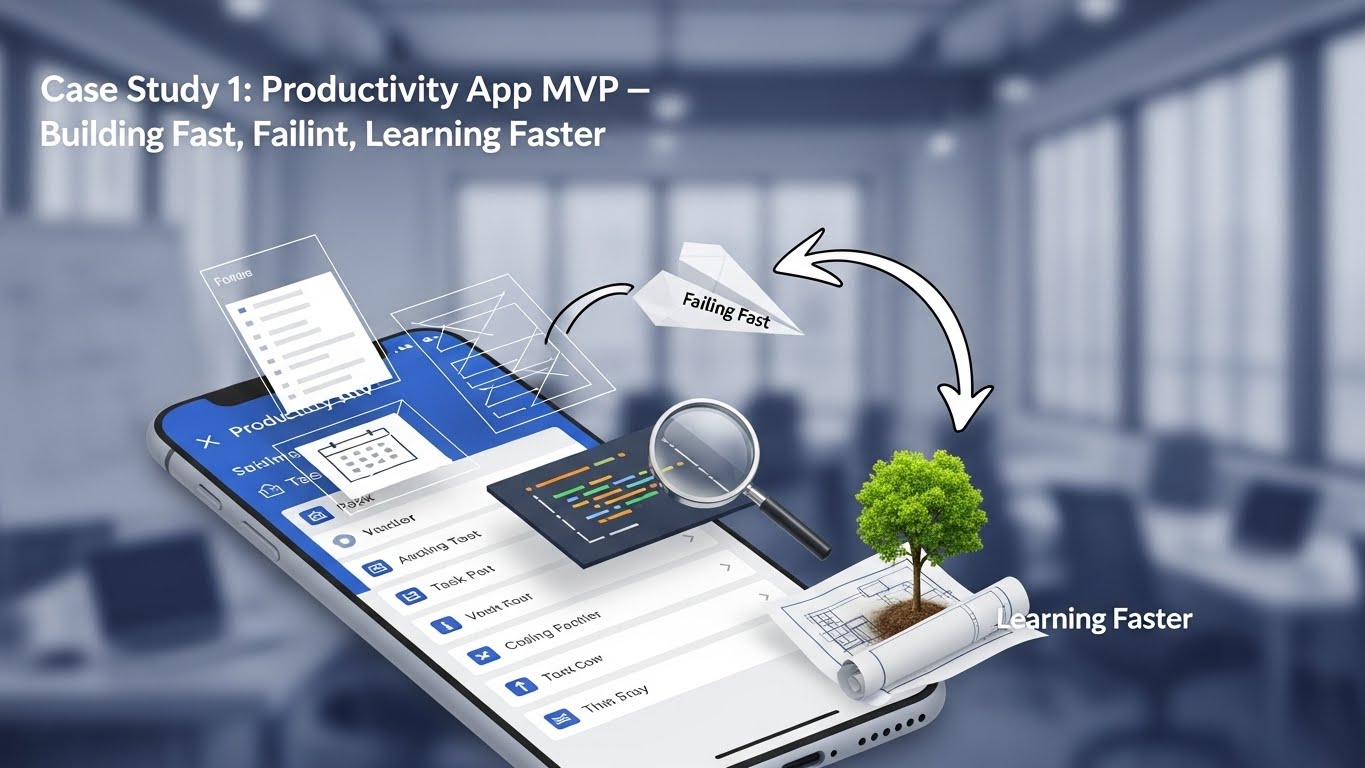
I set out to build a minimalist task manager for indie freelancers and solo creators—people who value speed and focus, and who often bounce between deep work and chaotic client requests. My hypothesis was simple: if I can reduce friction in task capture and weekly planning, users will stick with the tool long-term. The MVP shipped quickly, hit good activation, then collapsed on retention after week four.
This is the full story: what I built, how I launched, why it failed, and what I would do differently now.
The Context and Ambition
I’ve used nearly every popular task app out there. Many made me feel “organized” but didn’t consistently make my week easier. My bet was that a tightly scoped, local-first app with great keyboard ergonomics could beat the bloat: lightning-fast capture, intelligent tags, a weekly review flow I actually wanted to use, and zero onboarding friction.
The core customer segment: indie freelancers and solo creators juggling multiple clients, side projects, and content. They need quick capture, lightweight prioritization, and a way to reconcile small tasks with longer weekly goals.
My definition of success for the MVP:
- Activation: Create first list + add three tasks within 24 hours of signup
- Time-to-capture: Median under 2 seconds for creating a task from the home screen
- Weekly retention: 40% returning for the weekly review flow by week four
- Subjective value: “I feel less chaotic” reported by at least 60% of surveyed weekly users
Spoiler: we hit activation and speed. We missed retention and durable value.
What I Built (The MVP Scope)
I intentionally avoided the usual “feature buffet” and concentrated on the smallest loop that I believed mattered:
- Quick Capture Box: A single input at the top, always focused, optimized for keyboard. Type, hit Enter, done.
- Tagging Inline:
#clientA, #writing, #backlog tags inline in the input; autocomplete with arrow keys.
- Lightweight Lists: “Today”, “This Week”, “Backlog”, “Someday”. Each task can be bumped between lists with one shortcut.
- Weekly Review: A guided pass through “Backlog” and “Someday” to promote the right tasks into “This Week”. Includes a sanity cap: no more than 7 tasks for the week.
- Local-first: IndexedDB for storage, no required login. Sync was a later idea, not part of MVP.
- Speed-first UI: No settings page. No themes. No projects. Minimal UI with three screens and one modal.
- Basic Metrics: Anonymous local counters for activation steps and weekly review completion. Opt-in feedback prompt after week two.
The MVP avoided collaboration, mobile apps, rich notifications, calendar integrations, and complex repeating tasks. I wanted to validate the core solo flow first.
How I Launched
Launch constraints:
- Two-week build sprint, one-week polish.
- Seed audience from my mailing list (~400 subscribers) and one Reddit community.
- No paid ads. No PR. A single landing page and a 2-minute demo GIF.
Launch mechanics:
- Soft open: I shared it with 25 early readers to collect immediate feedback.
- Public release: I posted in productivity and indie dev threads with a short story of “why I built it” and an explicit ask for honest feedback.
- Follow-ups: Weekly check-ins to users who opted into feedback, with two specific questions: “What broke your flow this week?” and “What did you ignore or workaround?”
Initial results looked promising: people praised the speed and simplicity. Activation exceeded 60%. The app felt the way I wanted it to feel—no friction, no fluff, just tasks.
The Metrics (And What They Missed)
The raw numbers for the first month:
- Activation (first list + 3 tasks): 63% (n≈180)
- Median time-to-capture: 1.6s (measured locally with event timing)
- Weekly review completion by week two: 41%
- Weekly review completion by week four: 18%
- Self-reported “less chaotic”: 52% (from a small opt-in survey, n≈35)
And then the pain points:
- Retention cliff at week four for most users.
- Highly engaged early users drifted away despite good qualitative feedback about speed.
- Feature requests skewed toward collaboration or scheduling: “Can I share a task with my client?” “Can I see my tasks on my calendar?” “Can we add comments to tasks and assign?”
My metrics were focused on the solo loop I believed mattered. The numbers told me it worked in isolation. They didn’t tell me whether it mattered enough compared to the surrounding workflow requirements.
The Qualitative Signals I Ignored
Users said lovely things:
- “It’s the fastest way I’ve found to capture tasks.”
- “Weekly review feels clean and stupidly efficient.”
- “I love the tag autocomplete—it never fights me.”
But alongside the praise:
- “My client asked me to share the list, so I exported a screenshot.”
- “We ended up copying tasks into Slack because we needed comments.”
- “I still had to plan in my calendar, so tasks lived in two places.”
In hindsight, these were not “nice-to-have” requests. They were red flags that my MVP validated a sub-job (speedy capture) while ignoring the core job (coordinating work and time).
Why It Failed: The Misaligned Core Job
The value of a task app is downstream of coordination. For freelancers and creators, the real job is “make commitments visible and manageable across people and time.” My MVP nailed solo capture and weekly review but failed to attach tasks to the two social constraints that govern work:
- People: handoffs, assignments, comments, and status updates.
- Time: calendar alignment, deadlines, and schedule reality.
I built something delightful in a vacuum. When users needed to collaborate or see tasks in the context of their calendar, the MVP became an island. They left not because they disliked it, but because it didn’t plug into the world where commitments live.
Root causes:
- Sampling Bias: I interviewed mostly solo operators without frequent collaboration. My target audience actually needed lightweight sharing and handoffs more than I assumed.
- Success Metrics Bias: I measured activation and solo weekly retention, not cross-tool reliance (e.g., how often do users copy tasks into Slack or Calendar?).
- Narrow MVP Definition: I equated “smallest set of features” with “solo-only” and missed the smallest viable social loop.
What I Would Do Differently: The Smallest Viable Social Loop
If the customer’s core job is social, the MVP must include the smallest viable collaboration features—even if it sacrifices some solo elegance.
I would redesign the MVP around these pillars:
- Shared Workspace by Default: A simple concept: every list can be shared with one other person or a small team. Sharing does not require accounts; use a secure link with “assign/comment” enabled for invitees.
- Assignments and Comments: The bare minimum to move work across people: assign a task to someone and leave a single-threaded comment. No rich formatting; no attachments in MVP.
- Notifications: Lightweight email or in-app notification when you’re assigned or mentioned. Rate-limited. No push spam.
- Status and Handoffs: One status dropdown: “Open, In Progress, Blocked, Done.” A “handoff” button that pings the assignee and logs a timestamp.
- Time Context: A “Send to Calendar” action with an auto-generated 30-minute block. No two-way sync at first—just a one-click way to see tasks in time.
- Metrics That Matter: Measure handoff resolution time and comment response time. Track the percentage of tasks with an assignee and a status change within 48 hours.
These changes don’t balloon the product. They add a small loop where tasks can pass between people and land in time. That’s the job.
The Technical Shape (Keeping It MVP)
Even with collaboration, I’d keep the technical footprint small:
- Local-first Primary Store + Cloud Relay: Keep IndexedDB for speed, but add a simple relay service for shared lists and comments. Think “server as a mailbox” with conflict resolution via last-write-wins.
- Secure Shared Links: Each shared list has a scoped token. Invitees can assign/comment without full accounts; optional email verification for notifications.
- Dead-simple Schema:
Task { id, title, tags[], status, assignee?, comments[] }. Comment { id, taskId, author, body, createdAt }.
- Thin Calendar Integration: A single endpoint generates an
.ics event and opens the calendar app. No complex OAuth flows in MVP.
- Error Budget: Instrument failure categories (sync conflicts, notification failures) and keep auto-retry simple. Focus on reliability before adding features.
The philosophy remains: make the smallest loop reliable, even if it’s not feature-rich.
Reframed Success Metrics
Solo metrics were fine but insufficient. I’d measure:
- Handoff Resolution Time: Median time from “assigned” to “status change”.
- Comment Response Time: Median time from first comment to any reply.
- Task-to-Calendar Rate: Percentage of tasks that receive a calendar block.
- Team Retention: Shared workspace active by week four (at least two participants, with at least five tasks and two comments).
- Trust Indicators: Error rates under 1% for relay operations and notifications.
These directly capture whether the app is doing the customer’s job: reducing coordination friction.
Onboarding and Default Behaviors
Onboarding should align with the social loop:
- First Action: Invite one collaborator to your “This Week” list.
- Second Action: Assign one task and leave one comment.
- Third Action: Send one task to your calendar.
- Optional: Create your “Backlog” and tag a few items.
Make sharing the default path, not an edge case hidden behind a settings icon. The first experience should encourage a handoff.
The Personal Mistakes and What They Taught Me
- I optimized for speed because speed is motivating for me. But the market’s primary constraint wasn’t speed—it was coordination across people and time. My personal bias became the product’s bias.
- I conflated delight with value. Delight (beautiful, fast, frictionless) increases the likelihood that users try the loop. Value comes from making the loop relevant to their real work. I didn’t bridge that gap.
- I feared complexity, so I avoided collaboration entirely. The right approach was not “no collaboration” but “the smallest possible collaboration”. That’s a different mindset.
These lessons changed how I define MVPs now: MVP is the smallest loop that proves the core job—not the smallest set of features that prove a sub-job.
A Counterfactual: How Retention Could Improve
Imagine the revised MVP:
- A user captures tasks at speed (same as before).
- They invite a client or teammate to a shared “This Week” list.
- They assign a task, leave a comment, and hit “handoff”.
- The assignee gets a lightweight notification, responds, and updates status.
- The user sends two tasks to the calendar for Wednesday afternoon.
Measurements:
- Handoff resolution: 14 hours median.
- Comment response: under 4 hours.
- Task-to-calendar: 30% of weekly tasks.
- Week-four shared workspace retention: 40% (two people active).
If those numbers were true, retention would follow, even if not every solo user loved the added complexity. The app would do the job: coordinate work and time.
Edge Cases and Constraints
I also underestimated edge cases that affected trust:
- Offline and Sync: Local-first was great until users expected shared lists to reflect changes instantly. Convergent updates and conflict resolution are non-trivial—even in an MVP.
- Privacy and Scope: Invitees without accounts raise valid questions: who can see what? How do you revoke access? A scoped link with tokens and clear visibility indicators is essential.
- Notifications Noise: MVP notifications must be rate-limited and context-aware. Too many pings and trust erodes. Too few and handoffs stall.
A good MVP is as much about shaping constraints as it is about features.
What I Kept Right
Not everything was wrong. A few choices paid off:
- Keyboard-first UX: Power users loved it, and it anchored the app’s identity.
- Weekly Caps: Limiting weekly tasks to seven created a forcing function that aligned with deep work—something many users still appreciate.
- Zero Settings: It’s harder to scale, but it made the MVP opinionated and coherent.
These choices can live inside a more complete social loop.
Practical Blueprint for the “Redo” MVP
If I had to rebuild today, the plan would be:
- Job Definition: “Reduce coordination friction for freelancers and small teams across people and time.”
- MVP Scope:
- Shared lists with invite links
- Assign, comment, status
- Handoff action with notification
- Send-to-calendar action
- Quick capture and weekly review retained
- Tech:
- Local-first primary storage
- Cloud relay for shared actions
- Simple tokenized permissions
- Minimal calendar export
- Metrics:
- Handoff resolution, comment response
- Task-to-calendar rate
- Shared workspace retention week four
- Error rates under 1%
- Onboarding:
- Invite → assign → comment → calendar
Keep everything else out until these loops are reliable.
How This Changes My Approach Beyond This App
The broader lesson: MVPs succeed when they validate the smallest loop of the core job. The core job is often social or time-constrained. If your product sits adjacent to people or calendars, your MVP must cross those boundaries—even if in a very constrained, minimalist way.
In subsequent projects, I’ve applied this thinking:
- Marketplace MVPs: focus on SLA and liquidity loops first, not discovery features.
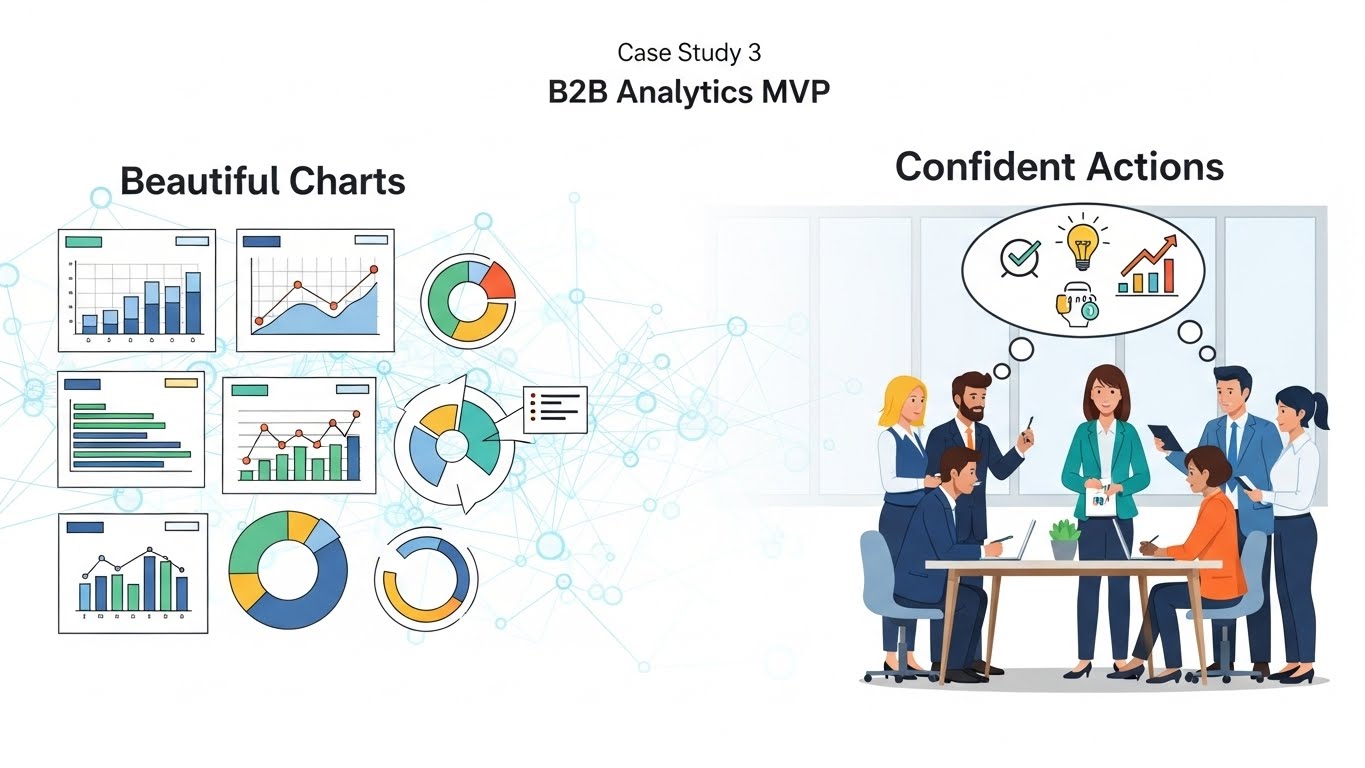
- B2B analytics MVPs: prioritize action interfaces over visualization.
- Consumer health MVPs: personalize constraints before gamifying motivation.
- Dev tool MVPs: establish a stable contract and validator before automation.
This reframing kept me from building beautiful islands that users admire and abandon.
Closing Reflection
I built a fast, lovely task manager that validated a sub-job and failed the core job. The speed and elegance were not enough. The smallest viable social loop—assign, comment, handoff, and a bridge to time—was the missing piece.
If I were to advise someone building in this space: find the narrowest collaboration feature that represents the essence of the job, and ship that in your MVP, even if it means compromising a little on solo perfection. Then measure the loop that carries the value: handoff resolution, comment response, and how tasks land in time. Let reliability be your north star.
MVPs should be small. But they should be small in the right place.